

teachings of Buddha : ค้นหาหนังสือธรรมะ หน้า 7 / 8
หน้าหนังสือทั้งหมด
101
Understanding the Pāli Verses and Buddhist Doctrine
The Text
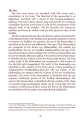
The first nine leaves are inscribed with Pāli verses and a commentary in Tai Yuan.4 The final leaf of the manuscript is an addendum, inscribed with a stanza of the Dvatiṃsa-mahāpuruśa-lakkhaṇ
The manuscript presents Pāli verses and commentary in Tai Yuan, summarizing Buddhist doctrines about the Buddha's physical body and wisdom. It includes thirty stanzas highlighting qualities like divin
106
Meetings with a Dhammakaya Master
Meetings with a Dhammakaya Master
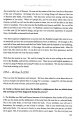
discovered the Law of Kamma. He was not the creator of the Law, but the re-discoverer of the Law of Kamma. All beings who do evil or wrong things will discover the L
In this enlightening session, the Dhammakaya Master discusses the Law of Kamma as a re-discovery, guiding individuals to see their actions' consequences through meditation. The Buddha's enlightenment
37
The First Monk Ordained by the Buddha: Kondanna
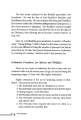
The first monk ordained by the Buddha personally, was Kondanna. He was the first of Lord Buddha's disciples, and Buddhism's first monk. He was ordained following Lord Buddha's first Sermon entitled th
The first monk ordained by the Buddha, Kondanna, was the first disciple who became a Stream-enterer after the Buddha's first sermon in Isipatana. This sermon allowed him to see the Dhamma. The Buddha
48
The Story of Mattakundali
46 Clear-minded Youths - 5 The Story of Mattakundali
On that morning, the Buddha arising early from his deep meditation of compassion saw, in his Net of Knowledge, Mattakundali lying on the verandah.
In this narrative, the Buddha notices Mattakundali, a weak youth, during his morning alms round. Despite his frail condition, Mattakundali expresses faith in the Buddha mentally. Upon passing, he is r
58
The Good and the Wicked: A Buddha's Discourse
At the end of the discourse, Anathapindika, the father of Culasubbhadda, approached the Buddha to invite him to have alms-food in his house the following day. But the Buddha replied that he had alread
In a profound dialogue, Anathapindika invites the Buddha for alms, but the Buddha declines, stating a prior commitment to Culasubbhadda. Confused, Anathapindika points out the geographical distance. T
151
The Tale of the Ogres and the Boy
ogre said to the other that they ought to eat the boy up,
but the other ogre forbade him. The False View ogre ig-
nored the warning and grabbed the boy’s feet, waking
him. The boy was startled and exc
In this tale, two ogres discuss eating a boy but are interrupted when the boy wakes. The True View ogre insists they help him instead. They transform into the boy's parents to bring him food and leave
159
The Festival of Fools: A Tale of Wisdom
Once there was a festival which had been organized by fools. It was called the ‘Festival of Fools’ and lasted for seven full days. The fools of the town would sit in a circle and get drunk before goin
Once there was a Festival of Fools characterized by reckless behavior of drunken townsfolk. A group of Buddha's followers, having achieved stream-entry, chose to meditate instead of participating. Upo
104
Unveiling the Mysteries of Quantum Mechanics
the Buddha with his own eyes, does not he really
'see' the Buddha? It didn't make any reference
in the text to any blindness or physical disabil-
ity which Vakkali might have possessed. Why
then, shou
Quantum mechanics is a branch of physics that deals with the behavior of matter and light on the smallest scales. It reveals that particles can exist in multiple states simultaneously, known as superp
52
Raising Smart and Virtuous Children
families, have everything they want, but receive little parental
supervision. These children have the highest chance of
becoming unwholesome.
Children of Type IV families receive continuous
knowledge
บทนำของการเลี้ยงดูเด็กที่เน้นการพัฒนาคุณธรรมและภูมิปัญญา จากหลักธรรมทางพุทธศาสนา ที่เสนอวิธีการสร้างเด็กดี โดยมีคุณสมบัติ 3 ประการ ได้แก่ ความดี ความฉลาด และความเห็นอกเห็นใจ ซึ่งเป็นพื้นฐานที่สำคัญในก
52
Raising Children to Be Smart and Virtuous
families, have everything they want, but receive little parental supervision. These children have the highest chance of becoming unwholesome.
Children of Type IV families receive continuous knowledge
เนื้อหานี้เกี่ยวกับการเลี้ยงดูเด็กตามหลักธรรมของพระพุทธเจ้า โดยนำเสนอคำสอนที่ช่วยให้เด็กเติบโตเป็นคนดี โดยเน้น 3 คุณสมบัติสำคัญ ได้แก่ ไม่มีความยุ่งยาก, มีสติปัญญา และมีความเมตตา ผู้ปกครองควรพิจารณาคุ
175
Training Oneself in Non-Recklessness by Practicing Austerity
Chapter 40
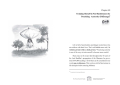
Training Oneself in Non-Recklessness by Practicing Austerity (Dhütanga) 4
Life is full of uncertainties and danger awaits those who are reckless with their lives. The Lord Buddha once sa
Chapter 40 emphasizes the significance of non-recklessness through the practice of austerity as taught by the Lord Buddha. It highlights that life is filled with uncertainties and that reckless behavi
198
Teaching Humility and Modesty Through Meditation
teaching ourselves humility and modesty. There may be times when an apology is required. Some difficulties are caused by our own carelessness, perhaps by damaging others' possessions, which can be sol
This text emphasizes the importance of humility and modesty, particularly in instances where apologies might be necessary due to personal oversights. It highlights the significance of staying calm and
42
Saddhā: The Criterion of Being the Tathāgata's Son
Saddhā: Criterion of being the Tathāgata's Son
The first point to be looked at is the criterion of being the Buddha’s ‘true son’ which is, in this passage, defined by means of his
irremovable confiden
This text discusses the criterion of being the Tathāgata's son, emphasizing the irremovable confidence (saddhā) in the Buddha. It defines this confidence as settled and unchangeable despite external i
72
Velama Sutta: The Power of Good Will
The Voice of Abstaining
7. Velama Sutta
“If one were to develop even just one whiff of a heart of good will, that would be more fruitful than... if one with a confident mind were to undertake the tra
This text discusses the teachings of the Velama Sutta, emphasizing that developing even a small amount of good will is more fruitful than significant material offerings and merits. It illustrates how
18
Meetings with a Dhamma Master
Meetings with a Dhamma Master
the greatest possible goodness to humanity, the destruction of Mara, which is the behind-the-scenes influential power of evil in existence. For Christians, I suppose, th
In this enlightening dialogue with Luang Por, he emphasizes the importance of clearing one’s mind to combat Mara, the personification of evil similar to Satan in Christianity. Luang Por explains that
59
The Importance of Chanting in Buddhism
your mind will clear and be open to receive merit. Your thoughts, speech, and action will not be led astray by temptation.
Performing Vatta serves constantly to remind us of the virtues of the Triple
Chanting in Buddhism plays a crucial role in enhancing faith and preserving teachings of the Buddha. It reminds practitioners of the virtues of the Triple Gem and helps them avoid temptation. Historic
51
Understanding Suffering in Buddhism
depressed and dejected.
1.1.8 Feeling slighted [domanassa] : This is when one has a 'chip on one's shoulder' (to be aggressively sensitive about a particular thing or bear a grudge).
1.1.9 Bemoani
This text explores the concept of suffering as taught by the Buddha, outlining twelve types of suffering including feeling slighted, bemoaning losses, and separation from loved ones. It highlights how
54
Understanding the Origin of Suffering in Buddhism
2.2 The Origin of Suffering as a Cause
In explaining the Origin of Suffering, the Buddha intended to make clear that the suffering experienced by living beings has craving as its cause. As soon as the
In this examination of the Buddha's teachings, the Origin of Suffering is explained as being rooted in craving, which leads to a cycle of suffering. The relationship between the Origin of Suffering an
197
The Middle Way: Buddha's Revolutionary Teaching
tered to liberate themselves from suffering, but because the strongest spiritual trend of the time was the practice of self-mortification, many went astray or perished in their quest. Having tormented
This text discusses the historical context of the Buddha's teachings, emphasizing how many were misled by the practice of self-mortification in their quest for liberation from suffering. It highlights
223
Exploring Dhammakāya and the Eightfold Path
Dhammakāya, Sotāpana: Effort, Right (see Right Effort)
Coarse, 108, 134; defilements of
Eightfold Path: arises internally as 136-7; Subtle, 108, 134
sphere 105; components 20, 117,
Dhammakāya Traditi
This text delves into the Dhammakāya tradition, highlighting key components of the Eightfold Path and its teachings on defilements, enlightenment, and the nature of suffering. Concepts are illustrated